China Top Vent Relief Valve Suppliers How to Choose?
Choosing among China’s top Vent Relief Valve suppliers requires more than comparing prices or polished brochures. The valve protects tanks, pipelines, and process equipment when pressure rises unexpectedly. A small sizing error can create a serious operational weakness.
Industry reports show why this decision matters. Grand View Research’s Industrial Valves Market report identifies oil and gas, chemicals, energy, and water treatment as major demand sectors. MarketsandMarkets also highlights safety, automation, and process efficiency as important valve purchasing drivers. These findings support a practical point: supplier capability must match the application, not merely the product name.
Look for evidence. Ask for material certificates, pressure-test records, calibration data, and traceable inspection procedures. Confirm compliance with relevant standards, such as API 526, ASME Section VIII, and ISO 4126, where applicable. A capable Chinese supplier should explain set pressure, backpressure, temperature limits, discharge capacity, and maintenance intervals in clear technical language.
A datasheet is not proof.
Review factory experience, engineering support, export history, and after-sales response. TÜV, SGS, or equivalent third-party inspection can strengthen confidence, but certificates still require verification. The Industrial Valve Manufacturers Association and published API guidance also emphasize correct selection, testing, and maintenance practices.
Do not choose from rankings alone. A supplier may be excellent for steam service but unsuitable for corrosive chemicals. Site conditions, media properties, installation orientation, and emergency requirements must be checked carefully. This guide compares China’s leading suppliers through those practical criteria. Some evaluations may remain imperfect, because public information is often incomplete. That limitation should be stated, not hidden.
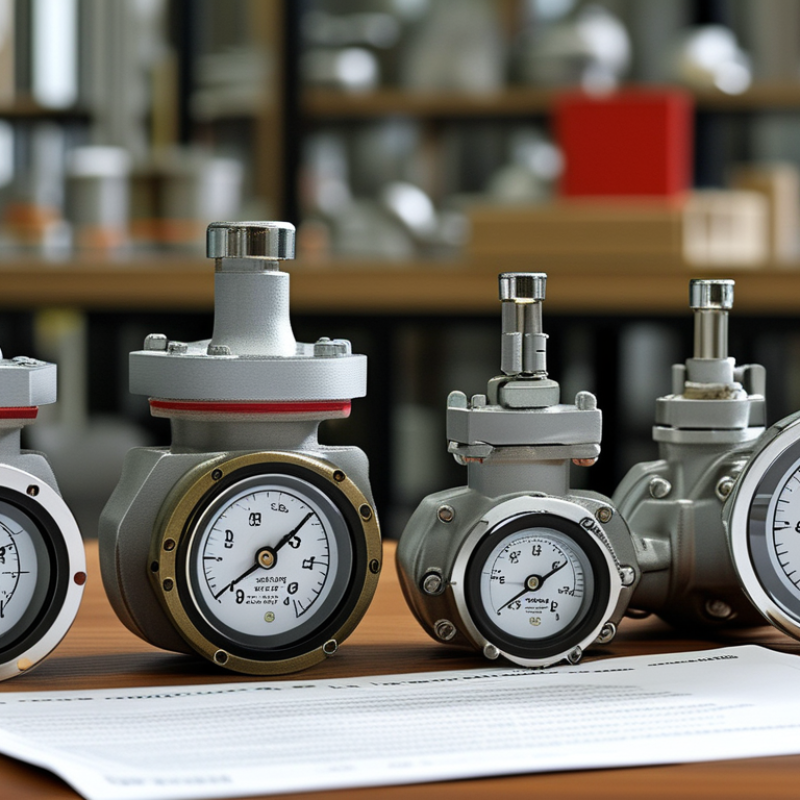
Define Tank Duty Using API 2000: Flow Rate, Set Pressure, and Vacuum Data
Choosing a top vent relief valve supplier starts with defining the tank duty, not comparing catalog prices. API 2000 provides a practical framework for this work. Record liquid filling and emptying rates, product temperature changes, vapor generation, and possible fire exposure. These values determine required outbreathing and inbreathing capacity.
Set pressure must remain below the tank’s maximum allowable working pressure. Vacuum settings must also protect the tank during liquid withdrawal, cooling, or sudden condensation. A small data sheet matters. Include normal flow, emergency flow, pressure set point, vacuum set point, operating temperature, vapor properties, and tank design limits. Keep units consistent.
Do not size the valve from flow rate alone. In field reviews, missing thermal and vacuum data often creates an unsafe assumption. It happens. Ask each supplier for certified capacity curves, test procedures, material specifications, and calibration records. Check whether the valve performs at the actual pressure and temperature, not only at a convenient laboratory condition. Inspect the proposed seat material, corrosion allowance, drain arrangement, and maintenance access. A reliable supplier should question incomplete duty data instead of accepting it without review. One detail may change everything. Recheck the final settings against API 2000, the tank drawings, and the owner’s operating conditions before purchase.
Shortlist Suppliers With ISO 9001, API 2000, and ISO 28300 Compliance
Choosing China-based vent relief valve suppliers requires more than comparing prices.
IEA’s Oil 2024 report projects global oil demand rising from 102.2 million barrels daily in 2023 to 105.4 million by 2030. That growth increases pressure on tank safety, maintenance, and documentation.
Start with a shortlist requiring ISO 9001 certification, plus demonstrated alignment with API 2000 and ISO 28300. Keep records.
ISO 9001 confirms a quality management system, not automatic valve performance. Ask for the certificate scope, issuing body, expiry date, and manufacturing-site address.
Request design calculations based on API 2000 and ISO 28300, covering:
- normal venting
- emergency venting
- vacuum protection
- set pressure
- relieving capacity
These standards address atmospheric and low-pressure storage tanks.
Do not accept “API compliant” as a complete answer. Ask for test reports, material certificates, calibration records, and traceable serial numbers.
During supplier audits, inspect machining, spring control, seat finishing, pressure testing, and final inspection logs.
Compare sample data with your tank’s product, temperature, vapor pressure, and flow requirements.
Reproduce the sizing calculation independently.
I would not trust a polished certificate alone. Some suppliers subcontract critical parts, and that risk is easy to miss.
Request change-control procedures and witness testing for the first production lot.
The best shortlist is smaller, slower, and technically transparent.
Compare Valve Materials, Temperature Limits, and 0.5–15 psig Set Points
Choosing Chinese top vent relief valve suppliers starts with data, not catalog rankings. For a 0.5–15 psig set range, request certified test curves at each pressure. API 520, Part I, emphasizes capacity sizing, inlet losses, and backpressure control. Low-pressure service exposes weak springs and seat leakage quickly. It is easy to miss.
Material selection must follow fluid chemistry and temperature. Carbon steel suits many dry, moderate-temperature services, but moisture can accelerate corrosion. Stainless steel offers better resistance. Nickel alloys may suit chloride or caustic exposure. PTFE and elastomer seals have different temperature ceilings. Verify the exact compound, not just “high temperature.” ISO 4126-1 and ASME Section VIII require a clear rating basis. Request pressure-temperature charts, material certificates, and seal compatibility records.
Compare cold-start, continuous, and upset temperatures separately. Thermal cycling can distort a valve that passes a room-temperature test. API 521 guidance also makes discharge routing and backpressure part of the design review. Ask whether the 0.5–15 psig setting is bench-tested, stamped, and repeatable after cycling. Independent calibration records add confidence. One practical warning: a low-set valve may chatter when the inlet line is too small. I would challenge vague “±3%” claims. Tolerance can change across the range. Supplier quality is proven by traceable tests, not polished photographs.
Select by Lifecycle Cost: MOQ, Lead Time, Warranty, and 5-Year Service
When choosing China top vent relief valve suppliers, compare lifecycle cost, not only the unit quotation. A practical five-year model should include purchase price, inspection, freight, spare diaphragms, calibration, downtime, and disposal. The U.S. Department of Energy’s Operations and Maintenance Best Practices guide reports that maintenance may consume 15–40% of operating costs in some facilities. That makes warranty coverage commercially important.
Request the MOQ, production lead time, test schedule, and emergency replacement time in writing. A low MOQ helps pilot projects, but a higher MOQ may reduce unit cost and secure matching spare parts. Ask whether lead time includes material certification and pressure testing. For each valve, record set pressure, temperature range, body material, connection size, and discharge direction. Small specification gaps become expensive later.
Warranty terms deserve careful reading. Check whether labor, return freight, seals, and field service are included. A twelve-month warranty is less useful if the supplier requires overseas shipment for every failure. API 576 stresses inspection, testing, and maintenance records for pressure-relieving devices; suppliers should provide traceable certificates and clear test procedures. In a simple example, a valve costing 180 dollars more can be cheaper over five years if it avoids one shutdown. My own bias is to trust transparent service terms, though lead-time promises still need verification through references and a small trial order.
China Top Vent Relief Valve Suppliers: How to Choose by Lifecycle Cost
Five-year cost comparison for a 10-valve project, including MOQ, lead time, warranty, and service exposure
| Anonymous Supplier Profile | MOQ (units) | Lead Time (weeks) | Warranty (months) | 5-Year Service Cost (USD) |
| Profile A | 10 | 6 | 12 | 360 |
| Profile B | 25 | 10 | 24 | 280 |
| Profile C | 5 | 14 | 36 | 210 |
The lowest unit price does not always produce the lowest lifecycle cost. Profile A minimizes inventory commitment and delivery time, while Profile C provides the longest warranty and lowest projected service cost. Profile B has a higher five-year cost in this 10-valve scenario because its MOQ exceeds the project requirement. Values are procurement-planning benchmarks in USD and should be validated against final quotations, specifications, freight terms, and site conditions.