China Top 10 EV Ultra Cable Manufacturers for Global Buyers
For global EV manufacturers, charging infrastructure providers, and fleet operators, selecting an EV ultra cable manufacturer is a technical decision, not merely a purchasing exercise. Cable quality affects charging speed, thermal stability, user safety, and long-term maintenance costs. A cable may look robust on a showroom floor, yet fail under repeated bending, outdoor moisture, or high-current operation. Small details matter. Conductor purity, insulation design, cooling channels, connector tolerances, and testing procedures all deserve close attention.
Dr. Dirk Uwe Sauer, a respected German battery and electromobility researcher, has stated, “The charging infrastructure is a central element for the success of electric mobility.” His observation remains highly relevant to EV ultra cable selection. A high-performance cable must work reliably beside a highway in winter, inside a busy depot, or under strong summer heat. Manufacturers listed in this guide are evaluated through practical factors, including production capability, certifications, customization support, export experience, and quality control. These indicators cannot guarantee perfect performance. No supplier is flawless.
Buyers should also examine evidence behind technical claims. Ask for test reports, material specifications, temperature ratings, and sample validation. Some manufacturers communicate clearly; others provide impressive numbers with limited supporting detail. That difference matters. This China Top 10 EV Ultra Cable Manufacturers guide aims to create a clearer starting point for global buyers. It does not replace engineering audits or local compliance checks. However, it can help procurement teams compare suppliers more carefully, reduce avoidable risk, and identify partners suited to demanding EV charging applications.
What EV Ultra Cables Are and Why They Matter in Global EV Systems
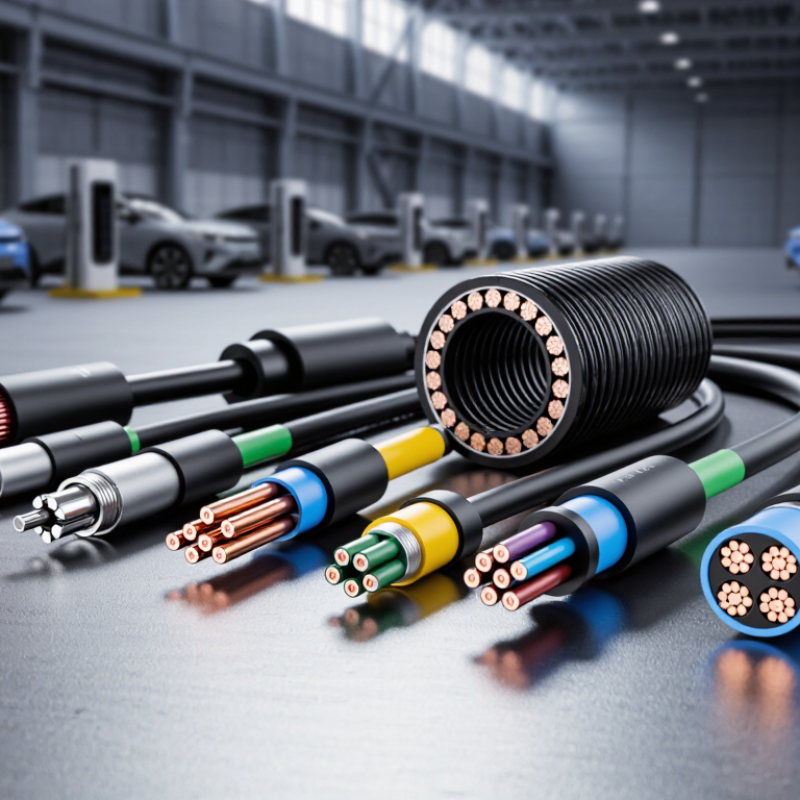
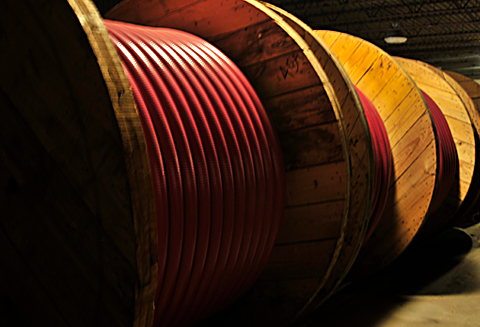
What are EV ultra cables? The term is not perfectly standardized. In global EV systems, it usually describes high-voltage cables built for battery packs, inverters, charging units, and fast-charging connections. These cables carry substantial current through compact spaces. They need strong insulation, shielding, heat resistance, and reliable connectors. A poorly selected cable can create heat, voltage loss, or electromagnetic interference beside sensitive electronics.
The International Energy Agency reported nearly 14 million electric cars sold worldwide in 2023. It also recorded more than four million public charging points by the end of that year. These figures explain the pressure on cable manufacturers. Charging systems must deliver higher power while remaining lighter and safer. A cable routed beneath a vehicle may face vibration, water spray, road salt, and repeated bending. Laboratory ratings alone cannot represent every operating condition. Field testing matters.
International buyers should examine conductor size, continuous current, voltage rating, bend radius, shielding performance, and traceability. Standards such as ISO 19642 and IEC 62893 provide useful reference points, but compliance claims still require verification. The IEA’s Global EV Outlook 2024 shows that market growth is strong, yet infrastructure quality differs widely between regions. That difference can expose weak specifications. In my experience, the cheapest cable often looks acceptable during inspection. Its limitations appear later, under sustained charging heat. Manufacturers that document testing, material batches, and connector compatibility offer more dependable evidence than attractive catalog language.
| Rank | Anonymous Supplier Profile | Typical Manufacturing Cluster | Primary EV Cable Category | Conductor Range | Typical Voltage Rating | Reference Current Range | Operating Temperature | Shielding and Insulation | Relevant Standards | Common Buyer Applications |
|---|---|---|---|---|---|---|---|---|---|---|
| 1 | Supplier Profile A High-volume OEM |
Jiangsu / Yangtze River Delta | High-voltage battery and inverter cable assemblies | 16–120 mm² copper | 600–1,000 V DC | 90–350 A | -40°C to +125°C | XLPE or silicone insulation; optional aluminum/polyester shield | ISO 19642LV 216RoHS | Battery packs, inverters, onboard chargers and electric drive units |
| 2 | Supplier Profile B Charging specialist |
Guangdong / Pearl River Delta | AC and DC EV charging cables | 2.5–50 mm² copper | 300–1,000 V AC/DC | 16–250 A | -40°C to +90°C | Flexible TPE or TPU jacket; abrasion-resistant outer layer | IEC 62893IEC 61851EN 50620 | Portable chargers, wall boxes, public DC fast-charging equipment |
| 3 | Supplier Profile C Thermal-management focus |
Zhejiang / Ningbo manufacturing region | High-current liquid-cooled charging cable | 25–95 mm² copper | 500–1,000 V DC | 200–600 A with active cooling | -40°C to +50°C ambient; conductor systems may reach +90°C | TPU jacket; integrated coolant channel and temperature sensing | IEC 61851IEC 62893IP54/IP55 design targets | High-power charging stations and commercial charging hubs |
| 4 | Supplier Profile D Automotive harness supplier |
Hubei / Wuhan automotive region | Shielded electric-vehicle powertrain cable | 6–70 mm² copper or tinned copper | 600–1,000 V DC | 40–250 A | -40°C to +150°C short-term, depending on insulation system | Cross-linked polyolefin; braided copper or foil shield | ISO 19642CISPR 25RoHS | Battery-to-inverter connections, EMC-sensitive power circuits |
| 5 | Supplier Profile E Robotics and flex-cable specialist |
Shanghai / Suzhou industrial belt | High-flex robotic EV cable | 0.5–35 mm² copper | 300–1,000 V | 10–160 A | -40°C to +105°C | Fine-stranded conductor; PUR or TPE jacket; torsion-resistant construction | ISO 19642IEC 60228UL 758 options | Automated battery assembly, moving charging arms and production equipment |
| 6 | Supplier Profile F Commercial vehicle supplier |
Shandong / Qingdao region | Heavy-duty electric bus and truck cable | 25–240 mm² copper | 600–1,000 V DC | 150–650 A | -40°C to +125°C | Thick-wall XLPE or silicone; high-vibration strain relief | ISO 19642LV 216UN ECE R100 compatibility | Electric buses, trucks, construction vehicles and fleet platforms |
| 7 | Supplier Profile G Connector-integrated supplier |
Fujian / Xiamen region | Overmolded HV cable assemblies | 2.5–50 mm² copper | 400–1,000 V DC | 20–250 A | -40°C to +125°C | TPU, XLPE or silicone; sealed connector overmolding | ISO 19642IEC 60529IP67/IP6K9K options | Battery service disconnects, power distribution units and e-axles |
| 8 | Supplier Profile H Export-oriented cable maker |
Anhui / Hefei automotive region | General-purpose EV high-voltage cable | 2.5–95 mm² copper or aluminum | 600–1,000 V DC | 20–320 A | -40°C to +125°C | XLPE insulation; optional shield, corrugation and orange identification jacket | ISO 19642IEC 60228REACH | Passenger EVs, hybrid vehicles and charging infrastructure |
| 9 | Supplier Profile I Specialty-material supplier |
Guangdong / Dongguan electronics region | Silicone-insulated high-temperature EV cable | 0.75–50 mm² tinned copper | 300–1,000 V DC | 10–250 A | -60°C to +180°C, application-dependent | Silicone rubber insulation; optional fiberglass braid or EMI shield | IEC 60228IEC 60332RoHS | Motor zones, battery thermal areas and high-temperature compartments |
| 10 | Supplier Profile J Custom engineering supplier |
Chongqing / Western China automotive base | Customized low-voltage and high-voltage EV harness systems | 0.35–120 mm² copper | 60–1,000 V DC | 5–400 A | -40°C to +125°C | XLPE, PVC, TPE or TPU; branch joints and molded terminals available | ISO 19642IATF 16949 systemsISO 14001 systems | Prototype programs, fleet conversions and low-to-medium-volume EV projects |
Related Posts
-
Exploring EV Ultra Cable Innovations at the 2025 China Import and Export Fair with Market Growth Projections
-
How to Choose the Best EV Ultra Cable for Your Electric Vehicle Charging
-
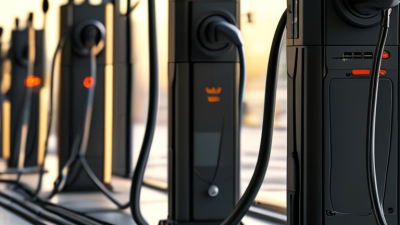
How to Choose the Best EV Ultra Cable for Your Needs?
-
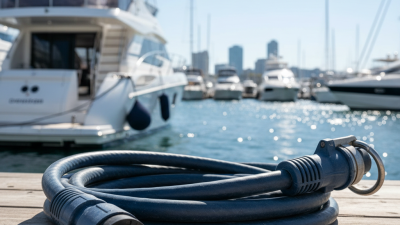
How to Choose the Best Shore Power Cable for Your Needs?
-

Maximize Your Boat's Performance: Choosing the Right Marine Battery Cable for Optimal Efficiency
-
Exploring the Future of Wire and Cable Technology Innovations in Connectivity
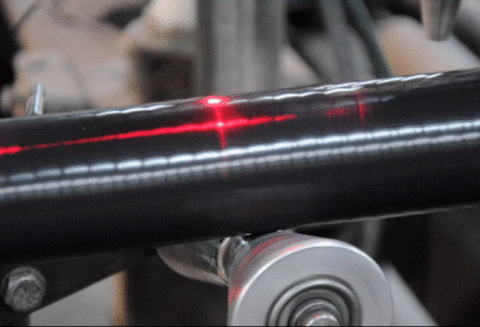
Our quality management system is registered to ISO 9001: 2015. Our team is dedicated to consistently providing quality service and products to our customers.